Heat, Tension, Resilience
On Tuesday, Nathalie and Frank had a detailed conversation about Nathalie’s experience running the DMZ marathon on Sunday, a challenging and unique event held in the heavily secured Demilitarized Zone (DMZ) between North and South Korea. Nathalie recounted her day, which began with a sense of anticipation and nervousness. The marathon day was extremely hot, with temperatures soaring to 33 degrees Celsius, making the asphalt unbearably hot and reflecting even more heat onto the runners. This intense heat led many participants to abandon the race, including Nathalie, who stopped at the 33 km mark to avoid risking her health.
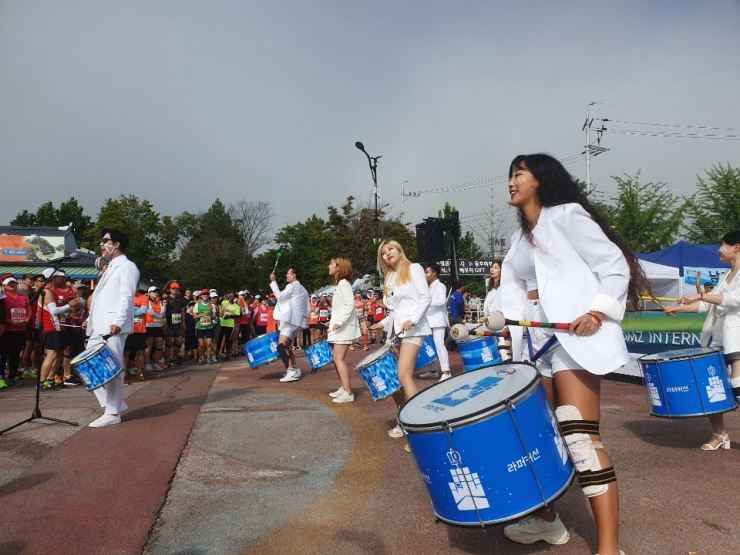
At the start of the marathon, Nathalie was greeted by a lively and almost carnival-like atmosphere. The day before, on Saturday, there were festivities including a DJ playing music from a modified car, and on the marathon day itself, an energetic warm-up session was led by a woman to get participants ready for the race. There was also live music from a band and appearances by local dignitaries and the current Miss Korea, which added to the festive ambience. Despite this lively start, Nathalie noticed that the event quickly became much more serious and sombre as the runners began their journey through the DMZ.
Security was tight, as expected in such a sensitive area. Nathalie explained that she had to provide her passport details during registration, which were sent to military authorities for clearance. On the day of the marathon, runners passed through multiple security checkpoints. They were each fitted with an electronic tag that recorded their entry and exit from the DMZ, ensuring that the same number of people who entered also left the zone. As she passed through these checkpoints, Nathalie felt a strong military presence. This heightened security added to the surreal and tense atmosphere of the marathon.
The route of the marathon took Nathalie and the other participants along the edge of the DMZ, where they ran alongside a dyke, blocking the view of North Korea. Nathalie described the eerie experience of hearing South Korean propaganda broadcasts aimed at the North, adding to the sense of running in a place still very much at war, despite the official ceasefire. The landscape was stark and barren, with no shade or vegetation to provide relief from the sun’s relentless heat. Nathalie mentioned that the heat radiating from the asphalt was so intense that it felt like 40 degrees Celsius, making the marathon even more gruelling.
As Nathalie ran, she noticed a stark contrast between the militarized environment and the peaceful, almost desolate nature of the DMZ itself. The area, largely untouched by human development due to its status as a no-man’s land, has become a haven for wildlife. She saw fields where rice was being harvested on the South Korean side, which she found jarring against the backdrop of military tension. This contrast between normal life and the militarized zone deeply affected Nathalie, making the experience even more surreal.
One of the most striking aspects of the marathon for Nathalie was the behaviour and attitude of the other participants. She expected a more communal and supportive atmosphere, especially given the event’s symbolic location and theme of peace. However, she found the other runners to be highly competitive and individualistic, with little interaction or camaraderie. Nathalie described how, unlike other marathons where runners often help and encourage each other, here, the participants were focused on their own race, often leaving her behind when she tried to join or match their pace. This lack of connection and support among the runners left her feeling somewhat isolated and disillusioned, as it seemed at odds with the event’s supposed spirit of peace and solidarity.
Nathalie shared that she was particularly disappointed by the lack of international participants and the absence of English translation for the event. The marathon, while billed as an international event, felt overwhelmingly Korean, and the language barrier added to her sense of isolation. Despite the challenges, Nathalie was proud of what she accomplished. She reflected on how her experience was both a personal achievement and a profound insight into the complex and tense environment of the DMZ. Even though she didn’t finish the full marathon, she felt a sense of fulfilment from having reached her goal of running within the DMZ, a place so fraught with historical and political significance.
Towards the end of the conversation, Nathalie reflected on the symbolic significance of running in the DMZ. She acknowledged that while her participation might seem small in the grand scheme of things, it was still a statement of peace and hope in an area defined by conflict. However, she also expressed a sense of futility, recognizing the limitations of what one person—or even 5,000 marathon participants—can do to affect change in such a deeply entrenched situation.
In terms of her physical condition, Nathalie mentioned that the intense heat and the long distance took a toll on her. However, she was pleasantly surprised to find that her recovery was quicker than expected. Reflecting on the future, Nathalie wondered how she would look back on this experience in years to come, considering it as a unique chapter in her life.
Overall, Nathalie’s experience at the DMZ marathon was a mix of physical challenge, emotional highs and lows, and a deep reflection on the broader implications of running in such a historically and politically charged location. The conversation highlighted the surreal nature of the event, the stark contrasts Nathalie witnessed, and the personal and collective significance of participating in a marathon in one of the most heavily fortified areas in the world.
Below, an article which appeared in the Korea Times in 2018:
https://www.koreatimes.co.kr/www/nation/2024/02/356_255274.html